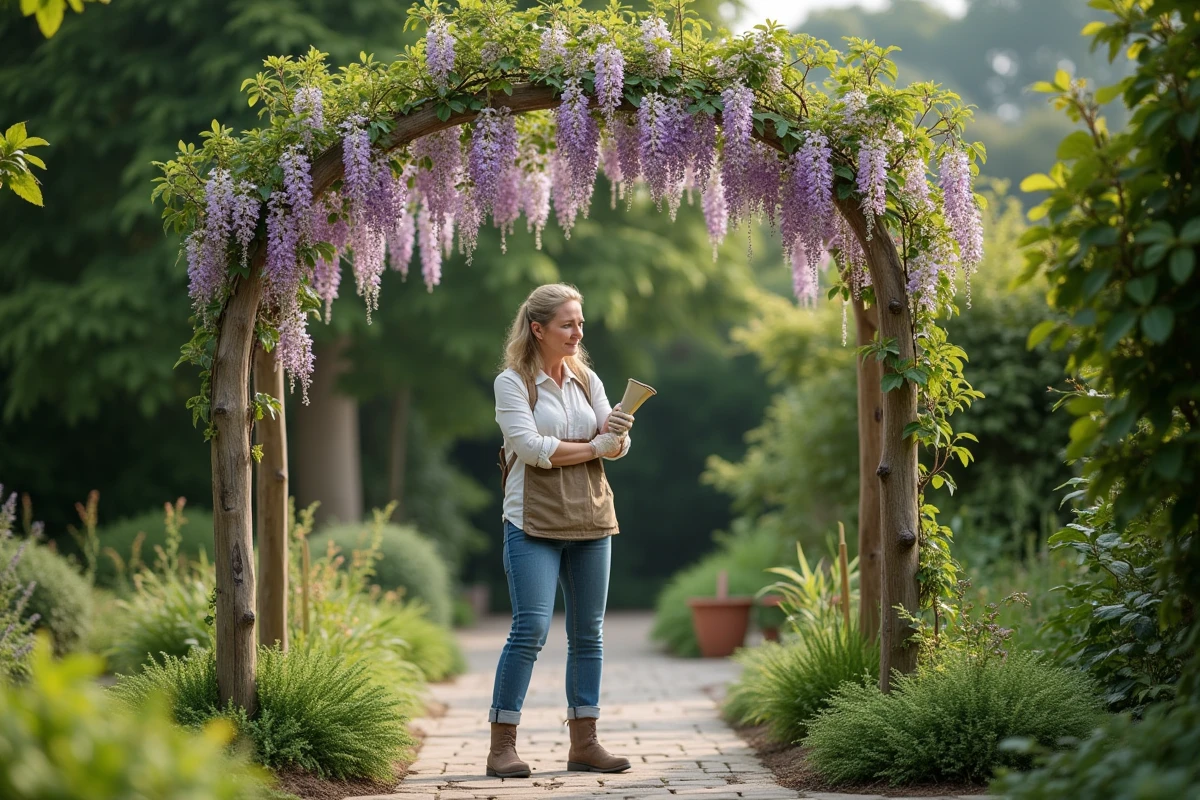
Wisteria withstands even the most severe pruning, provided it is guided from a young age. Yet, few gardeners exploit its potential to create a stable and lasting shade structure.
The vigorous growth of this vine imposes strict discipline but opens the door to unprecedented shapes. Adapting the parasol technique to wisteria requires some detours from the classic training on trellis or facade.
Why natural shade transforms comfort and life in the garden
As soon as the sun bears down, natural shade becomes the best ally for preserving the garden’s coolness. A wisteria parasol is much more than just a shelter: it is a promise of softness and filtered light, where artificial canopies fail to create that moving and vibrant atmosphere. Settle under the canopy, and the light changes, time seems suspended. Creating a wisteria parasol is not limited to a technical or decorative operation: it is a choice of ambiance, an option for those looking to blend freshness, beauty, and support for biodiversity. Whether for reading, napping, or providing a protected play area for children, wisteria transforms the garden into a refuge where nature reclaims its rights. Its vigor contrasts with the delicacy of its clusters, and every moment spent under its branches carries a taste of simple and universal privilege.
That’s not all: wisteria attracts bees, butterflies, and birds, contributing to the garden’s vitality while effectively shielding from the sun’s intensity. Where classic structures, like arbors or shade sails, impose their silhouette, wisteria makes way for life and the beauty of blooms. Of course, other trees, such as catalpa, albizia, white mulberry, and twisted black locust, offer their shade, but few rival the flexibility of a wisteria parasol, which adapts equally well to a small balcony or a vast lawn.
Indeed, there are material alternatives: pergolas, gazebos, trellises. They provide cover, but nothing matches the vitality and ecological dimension of a wisteria structured as a parasol. Choosing this option means preferring shade that renews itself, protects, and enriches the garden, far beyond mere thermal comfort.
Which plants to choose for an elegant and lively shaded corner?
Creating a successful shaded corner means playing the card of diversity and adaptation. Wisteria (Wisteria) naturally stands out for shaping a living parasol. The options are plentiful: Wisteria sinensis for its purple or white clusters from spring, Wisteria floribunda with long inflorescences ranging from pink to white, or Wisteria frutescens and brachybotrys for their subtle fragrance and remarkable vigor.
To densify the foliage and add rhythm to the parasol’s structure, various climbing plants can complement the wisteria. Here are some relevant allies to integrate:
- Golden hop, which brings a golden light and decorative foliage,
- Virginia creeper, to quickly cover large areas,
- Jasmine, which adds its fragrant and elegant touch.
By combining these species, the parasol gains visual interest and diversity, while extending the blooming season and maintaining precious coolness under the canopy.
The choice of foliage defines the character of the space: deciduous plants let in winter light, while evergreens maintain a protective veil all year round. You can also install some low perennials or Mediterranean plants, like lavender, along the edges to enhance the contrast of textures and attract more beneficial wildlife. Under the canopy, each plant plays its part, and the garden evolves, season after season.

Step-by-step creation of a wisteria parasol: tips, structure, and easy maintenance
To successfully create a wisteria parasol, the first step is to install a sturdy support. Whether you choose a pergola, a metal trellis, or a wooden frame, the structure must withstand the growing weight of the mature plant. Securely anchor the base into the ground, as a well-managed wisteria quickly becomes impressive.
Planting is preferably done in the fall or spring. Place the wisteria root in fertile, well-drained soil that is slightly acidic to neutral. The more generous the sun exposure, the more spectacular the blooming will be. Firm the soil, water abundantly at the start, then maintain a regular watering schedule for the first two years. Patience is key: expect three to five years before the parasol reveals its full flowering potential.
Pruning should never be taken lightly. Intervene after flowering, then at the end of winter, to channel the plant’s energy, encourage branching, and ensure a profusion of clusters. Remove overly vigorous or poorly placed branches, and trim secondary shoots: discipline enhances the beauty of the result.
In terms of nutrition, limit nitrogen to avoid excess foliage, and prefer a potassium-rich feed to encourage blooming. Monitor growth closely in the first year to guide the stems and achieve a dense and balanced plant umbrella. However, be careful: without pruning, wisteria can become invasive and disorder the structure. Also, remember that the plant, while ideal for providing shade, can be toxic to some pets.
Over the seasons, a wisteria parasol does not just provide shade: it invites you to experience the garden differently, under moving light and a living shelter that evolves with you. The garden is transformed, as if the space itself breathes a new air.