In France, the vast majority of people over 75 still live at home. This home care increasingly relies on technical and organizational devices that go beyond the traditional framework of home assistance. The silver economy market is structuring itself, European regulations are tightening, and financing models are evolving. Here is an overview of the solutions that are concretely transforming the daily lives of seniors at home.
Social prescription at home: a turning point in supporting seniors
Since 2024, several Regional Health Agencies have been experimenting with a little-known system: social prescription integrated into home assistance services. The principle is to trace social activity pathways (workshops, outings, meetings) directly in the software used by caregivers, just as one would for medical care.
The ARS Île-de-France published an interim report of its “Prescri’Soins et Lien social à domicile” program in June 2024. These pathways generate a systematic feedback to primary care physicians, which changes the game: social isolation is no longer a blind spot in medical follow-up; it becomes a documented parameter.
This approach addresses a major issue. The loss of social connection exacerbates cognitive and physical decline, and health professionals have until now lacked tools to intervene in this area. Field feedback varies on the actual adoption by general practitioners, but the framework now exists. Resources like those referenced on seniorstudio.org allow tracking the evolution of these initiatives that combine human support and digital tools.
Fall sensors and connected pill dispensers: what mutual insurance autonomy packs change
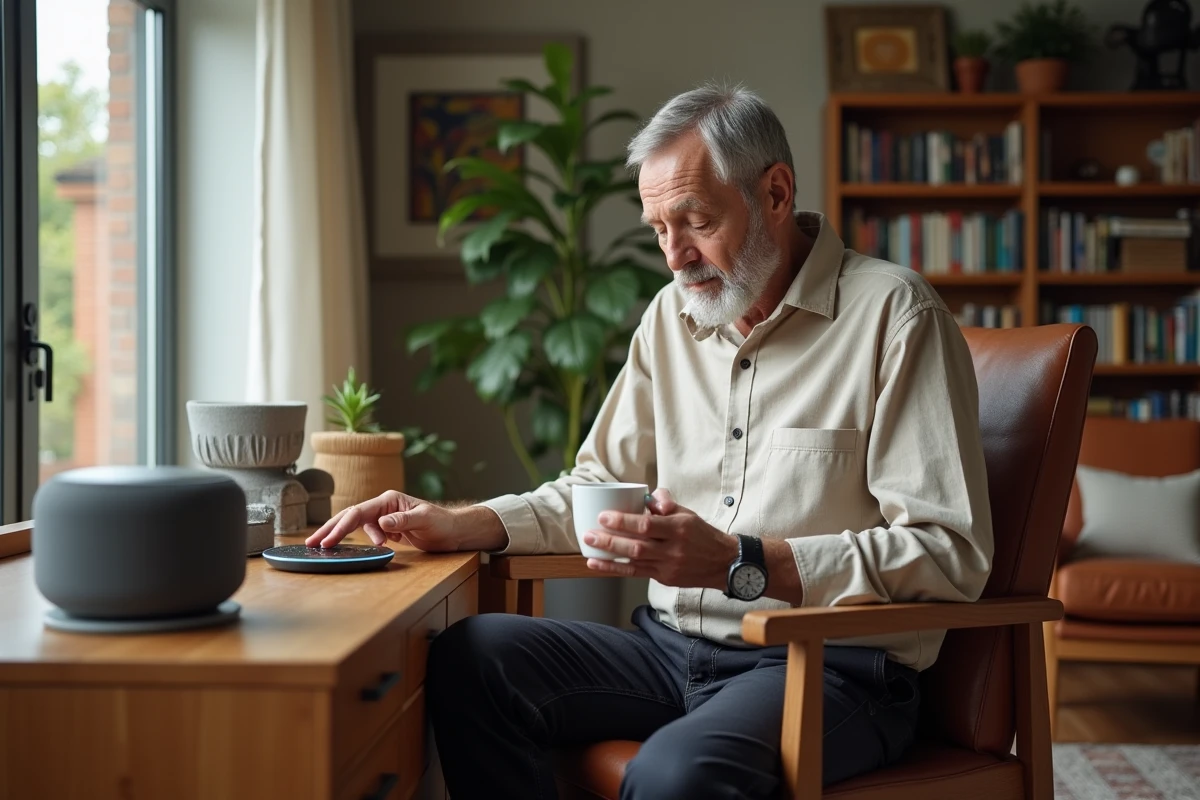
Connected objects for seniors have existed for several years. What is changing is their financing mode. The National Federation of French Mutuality documented in October 2024 the emergence of “autonomy packs” offered by mutuals and health insurers.
These packs partially reimburse equipment such as fall sensors, connected pill dispensers, or enhanced teleassistance solutions. The condition set is precise: the equipment must be coupled with human support, in the form of visits or nursing tele-follow-up. A sensor alone is not enough.
This requirement for human-technical coupling reflects a shared observation among professionals in the sector: a connected device without a contact person behind it only provides an illusion of safety. The senior who falls and whose alert is sent to a responsive call center benefits from a complete rescue chain. The one whose bracelet sends a notification to an absent relative remains alone.
What these packs concretely cover
- Fall sensors worn on the wrist or fixed in the home, with automatic alert transmission to a teleassistance service
- Connected pill dispensers that notify a pharmacist or the designated nurse of a missed medication intake
- Enhanced teleassistance solutions including a call button, an abnormal inactivity detector, and sometimes daily vocal follow-up
The available data do not yet allow measuring the impact of these packs on the duration of home care, but their existence marks a turning point in the insurance coverage of autonomy.
Artificial intelligence at home: obligations imposed by the European AI Act
The European regulatory framework on artificial intelligence, adopted in 2024, classifies AI systems used for monitoring or decision support in the care of elderly people at home as high-risk systems. This classification is not trivial.
It imposes heavy constraints on home care solution providers:
- Complete documentation of the algorithms used to detect behavioral anomalies or recommend interventions
- Traceability of decisions made or suggested by the system, with the possibility of independent audits
- Clear and accessible information for users (the senior, their family, professional caregivers) on how the system works
- Regular audits to verify the absence of bias and the reliability of alerts
For silver tech startups, this regulation represents a significant compliance cost. Small providers risk disappearing or being absorbed by groups capable of financing these documentation and technical obligations.
Privacy and surveillance: a still blurry boundary
The AI Act sets a framework but does not resolve all ethical questions. A sensor that analyzes movements in a home to detect a fall also collects data on lifestyle habits. Does the senior know precisely what the algorithm observes and who has access to it?
On the other hand, the transparency obligation imposed by the European regulation should compel manufacturers to provide understandable notices, which has not been guaranteed until now. Most current devices merely provide general terms of use written in legal jargon inaccessible to their target audience.
Home assistance services and digital tools: still partial integration
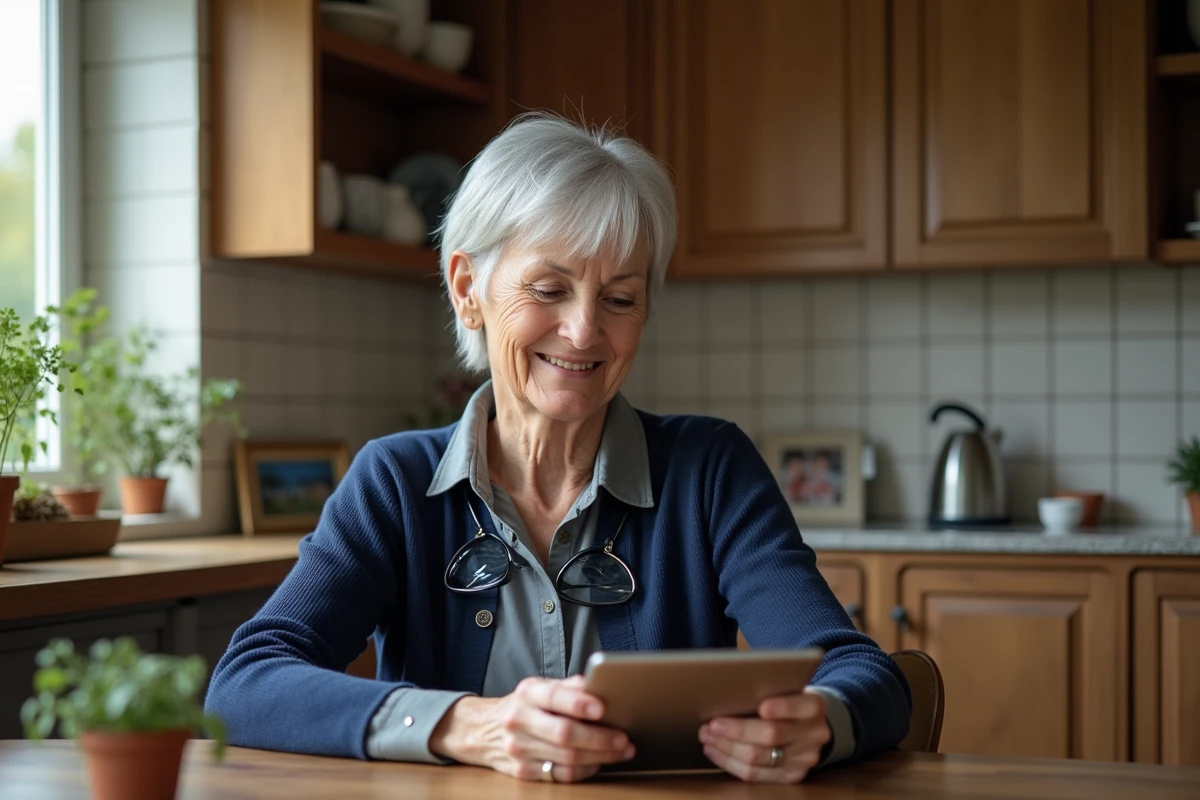
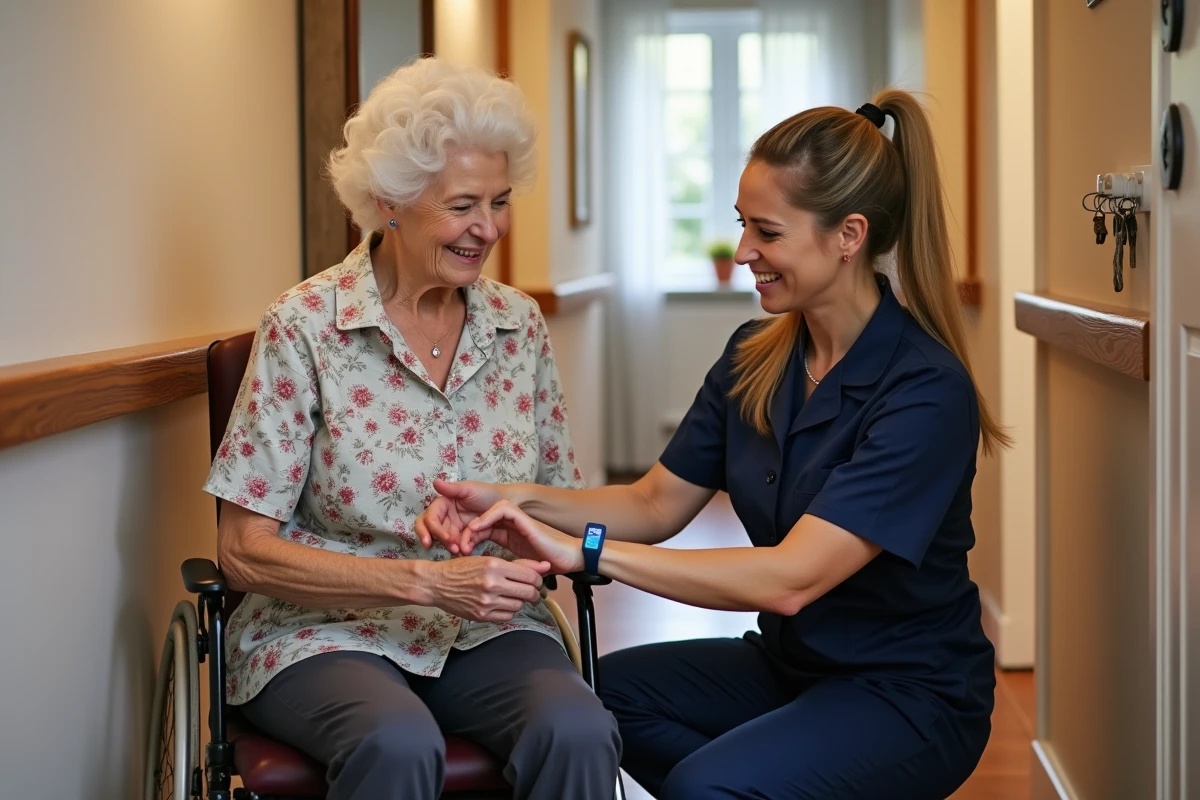
Home caregivers, nursing assistants, and nurses who work in seniors’ homes increasingly have digital tools to coordinate their interventions. Shared tablets, tracking applications, secure messaging with families: the sector is gradually digitizing.
The main barrier remains training. The tools exist, but their adoption varies greatly from one service to another, depending on the resources allocated to upskilling the teams. A software for tracking social prescription pathways is only valuable if the caregiver knows how to use it and dedicates time to it, in already very busy days.
The other difficulty lies in interoperability. Data collected by a fall sensor, those entered by the home caregiver, and those from the primary care physician rarely circulate within the same system. This fragmentation limits the relevance of overall monitoring, and no common technical standard has yet emerged in the senior home care sector.
The daily lives of seniors at home are transforming under the combined effects of technology, regulation, and new financing models. Traced social prescriptions, mutual autonomy packs, and European AI regulation are shaping a more structured landscape. The open question is less about the existence of solutions than about their real accessibility for elderly people whose relationship with technology and financial resources remains very heterogeneous.