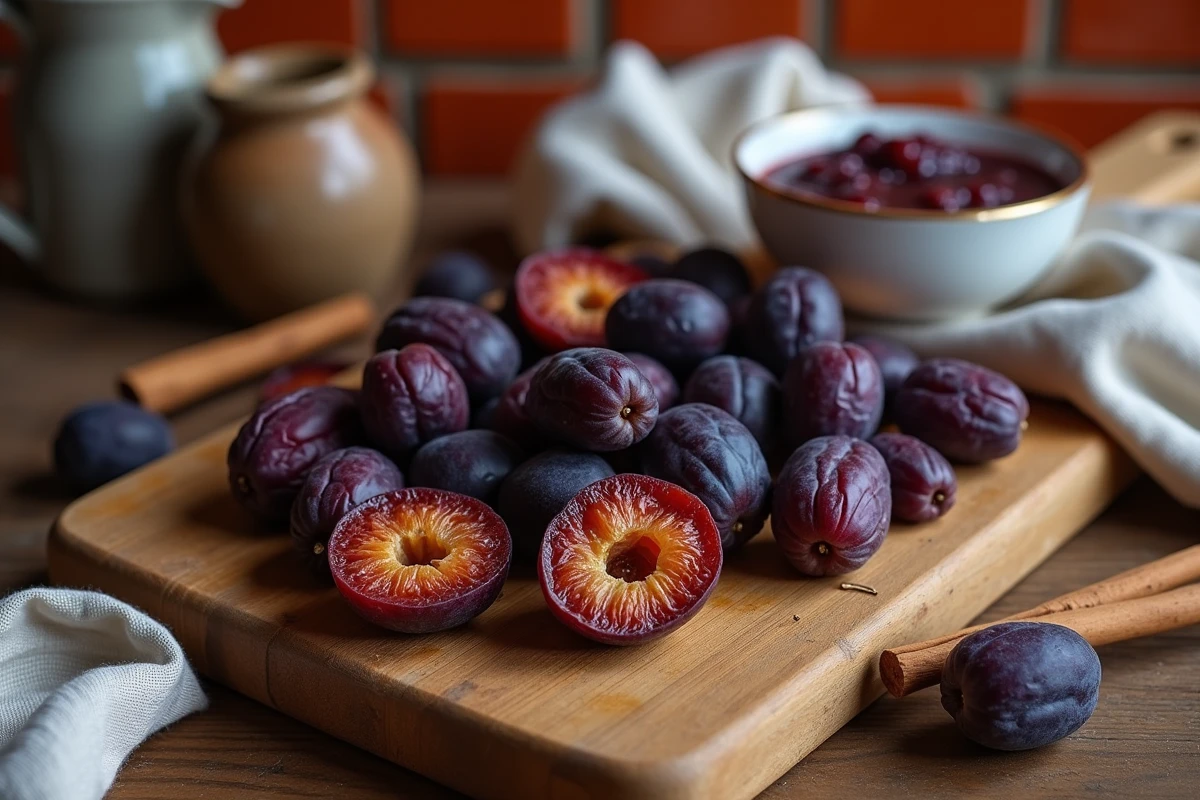
The prune you snack on quickly and the one simmering in a tagine do not have the same effects on your body. The distinction between raw prune (that is, dried, uncooked) and cooked prune in a recipe changes the game nutritionally, particularly for digestion and glycemic response. Understanding this difference allows you to make the most of this dried fruit all year round.
Raw or cooked prune: what really changes for your body
Have you noticed that a whole prune eaten as is satisfies you faster than a slice of prune far breton? It’s not just an impression. The whole prune retains all its fibers and sorbitol, a sugar alcohol that stimulates intestinal transit.
The EFSA (European Food Safety Authority) has validated a health claim regarding transit, but only for dehydrated prune consumed as is. Cooked preparations (cakes, compotes, stews) where the prune is present in small amounts or heated for a long time do not benefit from this recognition. In other words, three dried prunes in a bowl of yogurt and three prunes melted in a cake do not have the same digestive impact.
To better understand the benefits and advantages of the prune, we also need to look at glycemia. Research published in the journal Nutrients in 2023 shows that the whole prune causes a moderate glycemic response due to its fibers and sorbitol. Filtered prune juice or desserts with added sugars lead to a more pronounced increase in blood sugar.
The raw prune remains the most interesting format nutritionally. Cooking does not make it bad, but it diminishes some of its benefits, especially when sugar is added or it is drowned in a rich preparation.

Prunes and bone health: an underestimated benefit
We spontaneously associate prunes with digestion. Their role on bones is much less known, yet recent clinical data document it.
A study published in 2022 in the American Journal of Clinical Nutrition followed postmenopausal women. Those who consumed prunes daily showed better preservation of their bone density compared to the control group. The mechanism involves the polyphenols in prunes, which slow down bone resorption (the process by which bone naturally degrades with age).
This benefit has been observed with dried, uncooked prunes. No equivalent data exists for prunes incorporated into cooked dishes. If you are looking for this protective effect on your bones, prioritize the natural prune, as a snack or in muesli.
Seasonality of Agen prunes: harvest and availability
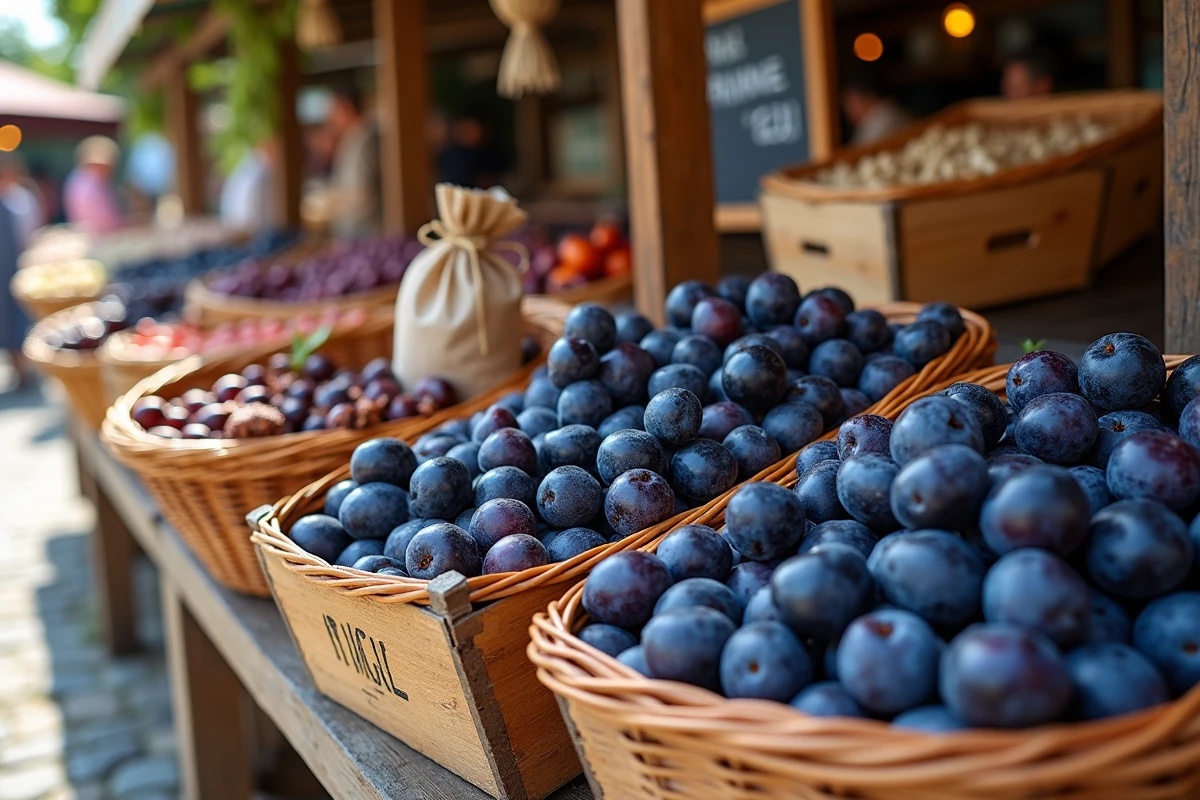
The prune comes from the Ente plum, a variety mainly grown in the southwest of France. The harvest of plums takes place at the end of summer, usually between August and September. The fruits are then dried (traditionally in an oven) to become prunes.
As it is a dried fruit, the prune can be consumed all year round without loss of quality. This is one of its great advantages over fresh fruits. A prune from Agen bought in January offers the same nutritional qualities as a prune bought right after the harvest, provided it has been properly stored (in a cool place, away from moisture).
The IGP (Protected Geographical Indication) label guarantees that the Agen prune has been grown and dried in the authorized departments of the southwest. If you are looking for a semi-dried prune (dried at low temperature, softer), make sure it also carries this mention.
Semi-dried or rehydrated prune: two textures, two uses
The semi-dried prune is partially dried, giving it a juicy texture. It is often eaten as is, as an appetizer or dessert. The rehydrated prune, on the other hand, is a dried prune soaked in water. Its texture is softer, and it integrates better into cooked preparations.
- The semi-dried retains more fruity flavor and stands alone as a snack.
- The rehydrated absorbs the flavors of a marinade or cooking juice, making it ideal for stews.
- In baking (far breton, clafoutis), both work, but the semi-dried adds a more pronounced moistness.
Recipe ideas: where the prune makes a difference in cooking
The prune shines in sweet-salty combinations. Rather than listing dozens of recipes, here are three directions where it adds real taste value.
Stews: tagine and braised meats
Lamb tagine with prunes is a classic for a good reason: the natural sugar in the prune caramelizes during cooking and balances the spices. The same principle works with braised veal or pork. Add the prunes in the last twenty minutes of cooking so they retain their shape without falling apart.
Baking: far breton and beyond
The far breton with prunes remains the most sought-after recipe. The key to a good far is a batter (the milk-egg-flour mixture) that is sufficiently liquid so that the prunes remain suspended and do not sink to the bottom of the mold. Let the batter rest for at least an hour before baking.
Beyond far, consider apple-prune crumble or fruit cake where the prune advantageously replaces dried apricots when you are looking for a rounder and less acidic note.
In raw form: quick combinations
- Prunes stuffed with fresh cheese and nuts, for an express appetizer.
- Chopped prunes in an oatmeal porridge with a spoonful of honey.
- Whole prunes in an endive salad, with walnut halves and a drizzle of balsamic vinegar.
These no-cook preparations retain all the fibers and sorbitol. For digestion and glycemia, these are the most effective formats.
The prune benefits from being consumed in both forms, raw and cooked, but keeping in mind that its most well-documented health benefits concern the natural dried fruit. Reserve cooked recipes for taste pleasure, and the prune as is for nutritional goals.