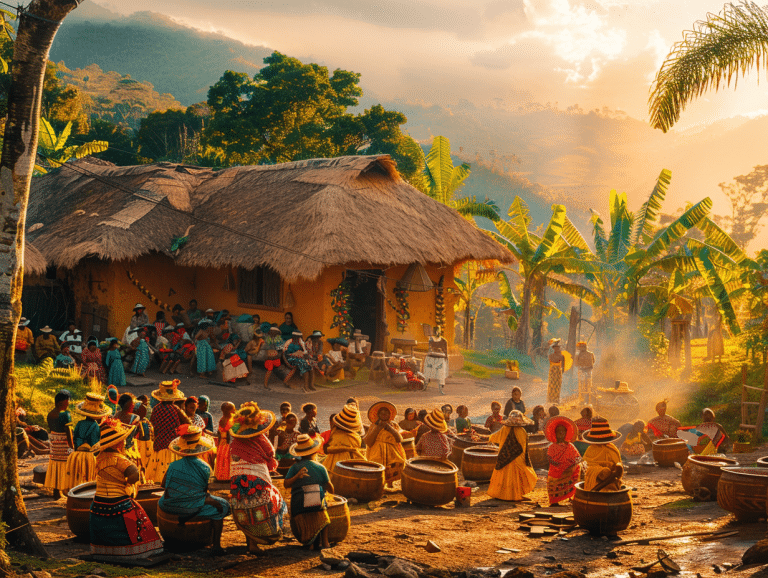
Madagascar, nicknamed the Red Island, is a true treasure chest of cultural riches. Each region of this vast island is home to unique customs and traditions, ranging from the famous turning of the dead ceremonies in the Highlands to the dances and songs of the Vezo tribes, experts of the sea.
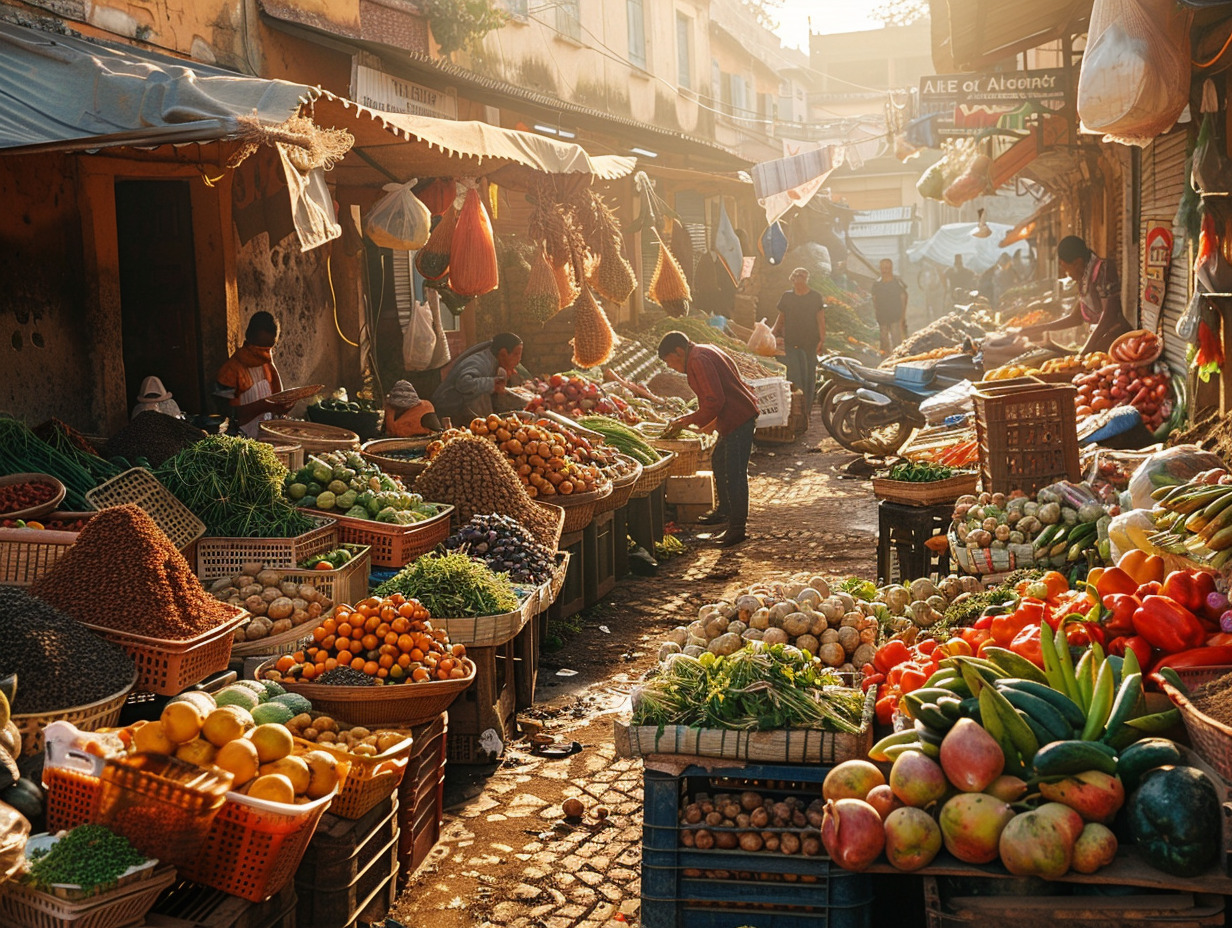
The linguistic diversity and ancestral practices shape the daily life of the Malagasy people. Colorful markets are filled with local crafts, hand-embroidered fabrics, and gemstone jewelry. Discovering Madagascar is to dive into a universe where every gesture, every word, tells a millennia-old story.
The Malagasy Traditions and Rituals
The traditions of Madagascar reflect its complex past and animistic beliefs. Among them, the Fady hold a central place. These social and religious taboos govern the daily lives of every inhabitant of Madagascar. They are often linked to the Razana, the revered ancestors, whose respect is paramount.
Another emblematic ritual is the Famadihana, or turning of the dead. This ceremony involves exhuming the bodies of ancestors to wrap them in new shrouds, thus marking the unbreakable bond between the living and the dead. For every inhabitant of Madagascar, this practice is much more than a simple tribute; it is a reaffirmation of the importance of ancestors in daily life.
Divinatory and spiritual practices are omnipresent. The Mpanandro (astrologers) and Ombiasy (healers) play a fundamental role in society. They are consulted for advice and healing, using ancestral techniques. The Tromba, spiritual possession sessions, allow communication with the spirits of ancestors. For the inhabitant of Madagascar, these practices are essential to maintain the balance between the visible and invisible worlds.
Cultural and Artistic Influences
Madagascar, rich in its history and multiple interactions, stands out with a unique culture, the result of various influences. French colonization has left a lasting mark, visible in the architecture of cities like Antananarivo, but also in the language, with French still widely used alongside Malagasy.
Asian influences can be seen particularly in the art of wood carving, a tradition dating back to the early Austronesian settlers. The geometric patterns and representations of animals on art objects testify to this rich influence. Similarly, Malagasy cuisine, with dishes like romazava or ravitoto, incorporates techniques and ingredients from Asia.
Music and Dance: A Harmonious Blend
Malagasy music is another area where this cultural blend is manifested. Genres such as salegy, typical of the northern part of the island, or beko, a funeral song from the south, show African influence. The guitar and the valiha, a traditional bamboo instrument, combine to create unique sounds. The hira gasy, rural musical theater, combines singing, dancing, and storytelling to depict daily life and local beliefs.
- Salegy: rhythmic and danceable music, very popular in the north of the island.
- Beko: melancholic and deep song, often used during funerals.
- Hira Gasy: street performance blending music, dance, and theater.
The artistic and cultural influences of Madagascar are thus the result of a harmonious blend, where each element, whether African, Asian, or European, enriches the cultural mosaic of the island.