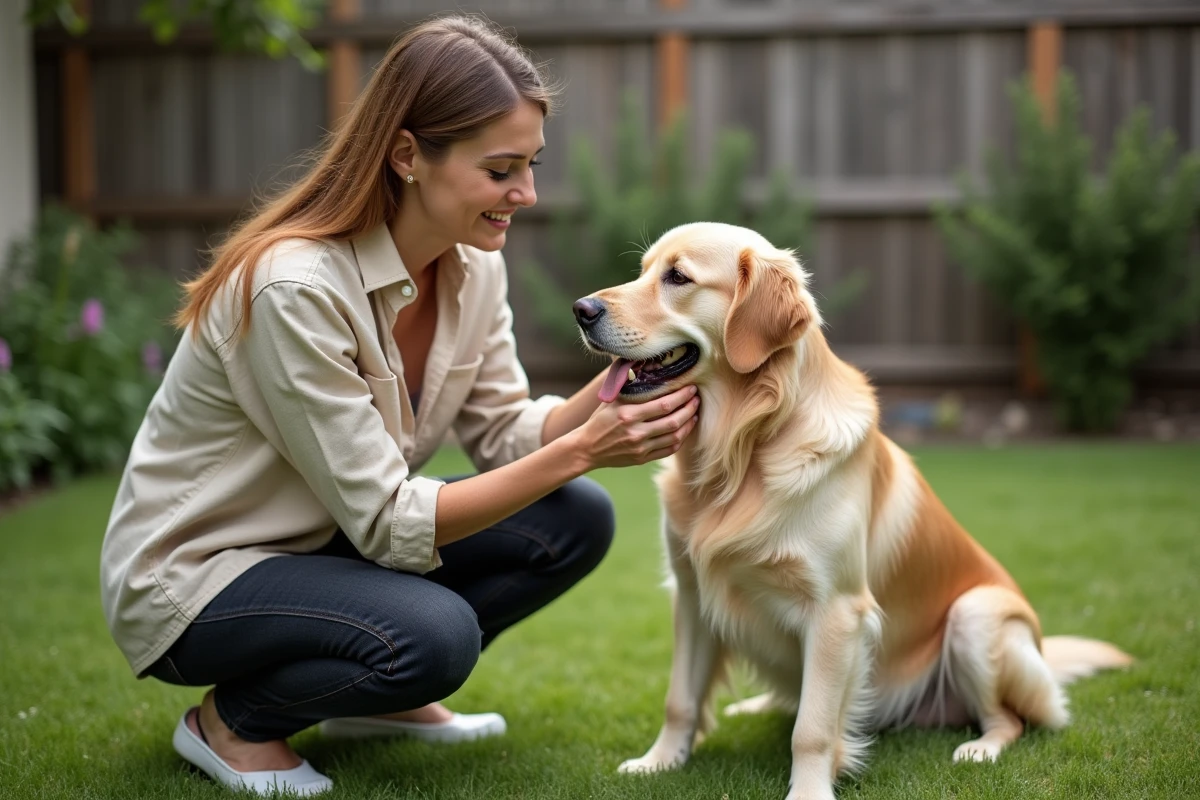
A dog scratching the ground before lying down, another turning its head when stared at, a third yawning during a training session: these micro-behaviors convey precise information about the animal’s emotional state. Ignoring them means missing out on a significant part of canine communication and, ultimately, allowing avoidable tensions to build up.
Calming signals and daily canine communication
We regularly observe owners in consultation who confuse a “calm” dog with an inhibited one. Looking away, licking the nose, and yawning out of context of fatigue are calming signals, not signs of indifference. Identifying them allows for adjusting an interaction before it escalates into growling or biting.
Sniffing the ground while walking, often interpreted as a distraction, also serves as a social signal. A dog that sniffs conspicuously in front of an unknown peer is trying to diffuse tension. Pulling on the leash at that precise moment removes its main tool for peaceful communication.
To delve deeper into these concepts and discover other topics related to canine health and behavior, the dog articles on AlmAnimal address complementary issues, from dietary choices to veterinary care.
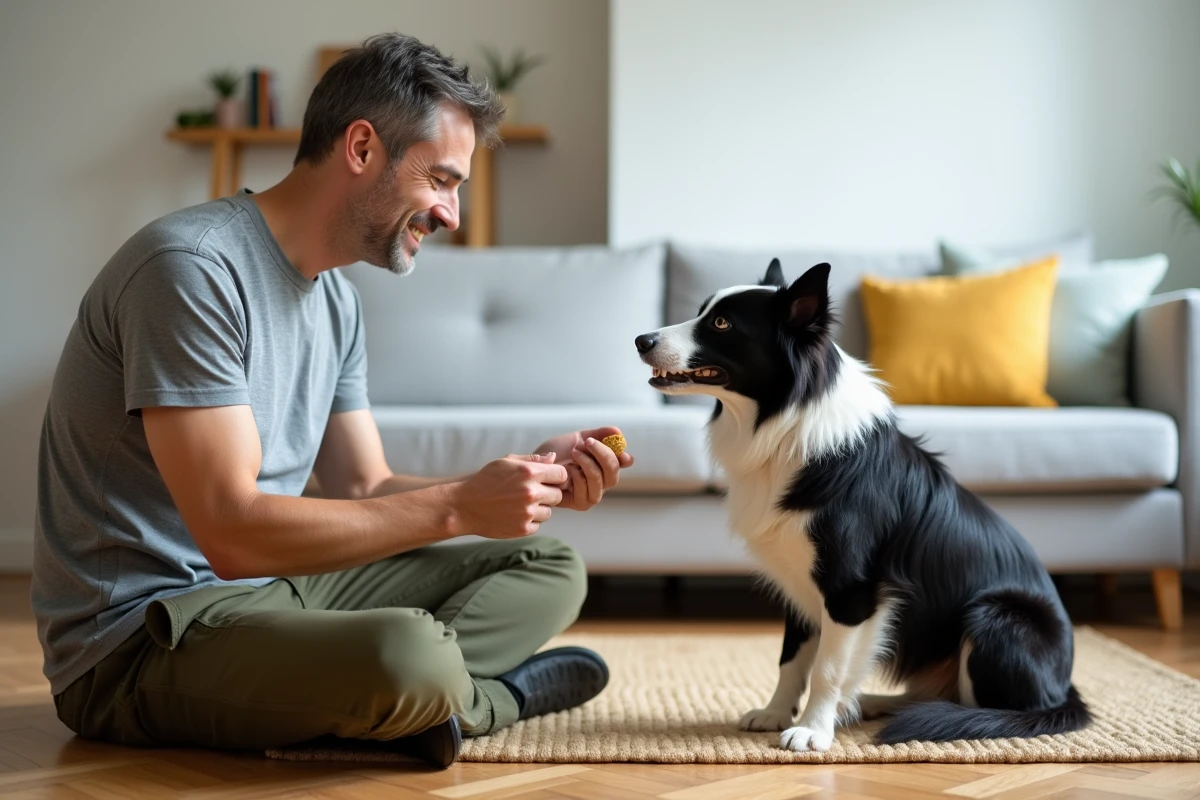
Home enrichment: compensating for lack of stimulation
An under-stimulated dog develops compensatory behaviors: destruction, repetitive barking, excessive paw licking. Physical exercise alone is not enough. Mental expenditure plays at least an equivalent role in behavioral balance.
Home enrichment is not just about buying a treat-dispensing toy. It involves varying the sensory channels engaged.
- Prolonged chewing (antlers, dried tendons, digging mats) activates the parasympathetic system and promotes a return to calm, especially after a walk cut short by the weather.
- Licking, via a licking mat coated with wet food or plain yogurt, produces a comparable effect. It is a relevant alternative on hot days when walks must be limited to early morning and late evening slots.
- Stuffed ice cubes (unsalted meat broth, allowed fruit pieces) combine hydration, occupation, and olfactory stimulation. They effectively replace a walk on scorching concrete in the middle of summer.
- Searching for hidden treats in the garden or apartment engages the dog’s dominant sense, smell, for several minutes.
We recommend offering at least two different types of enrichment each day, alternating the supports to avoid habituation.
Reading cleanliness signals in puppies
Cleanliness is learned over several months, with often longer delays for small breeds. A puppy that sniffs the ground, circles, or whines for no apparent reason is about to relieve itself: this is the moment to take it out immediately, without waiting for it to squat.
The window of action is short. Between the first signal and elimination, sometimes less than a minute passes. Anticipating these behavioral cues significantly reduces the learning duration compared to a method that relies solely on scheduled outings every two hours.
Common mistakes that delay acquisition
Punishing a puppy afterward teaches it nothing. Its brain does not connect the reprimand with the urine deposited twenty minutes earlier. Cleaning in front of it with an ammonia-based product worsens the problem: the smell resembles that of urine and reinforces marking in that spot.
Rewarding immediately after elimination in the right place remains the most effective lever. The treat should arrive within three seconds of the act, not once back inside.
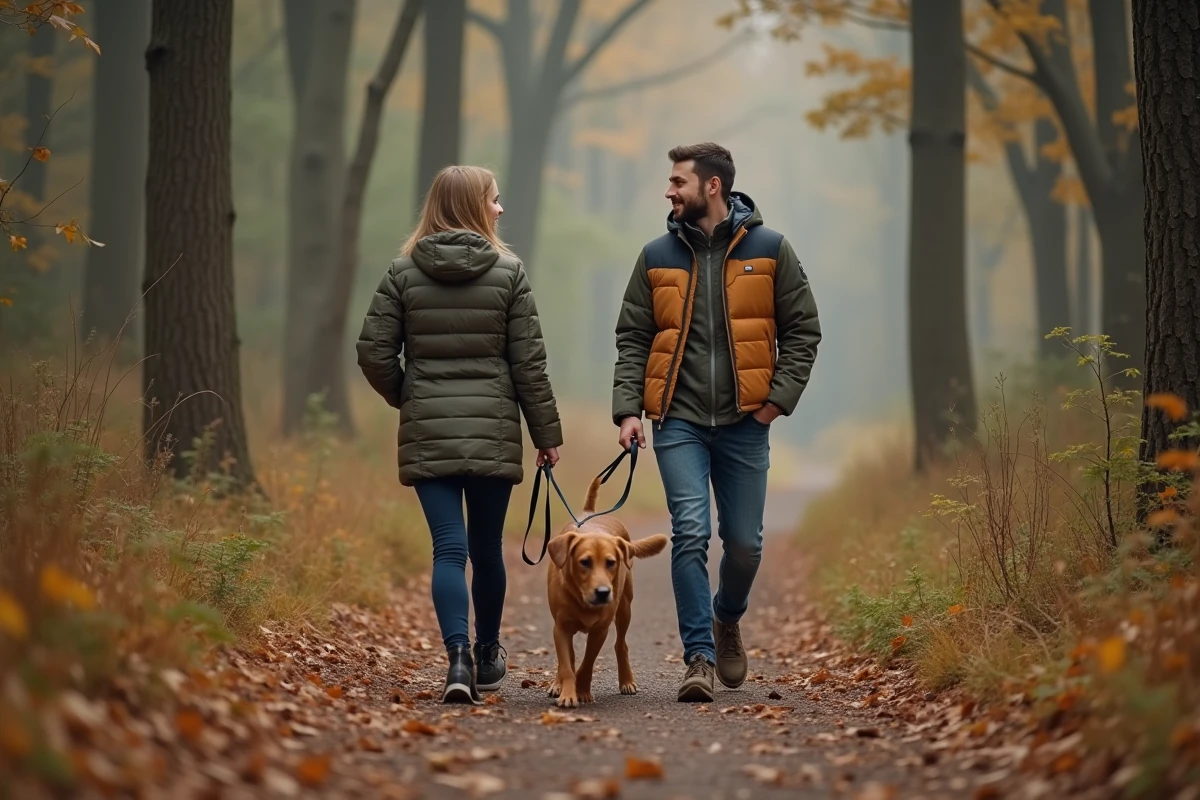
Heat management and adapting outings
Heat strokes represent a veterinary emergency whose severity is often underestimated. A dog hardly sweats through its skin: its thermoregulation relies on panting and paw pads. Never leave a dog in a car, even with the window slightly open, even in the shade: the internal temperature rises to levels incompatible with survival within minutes.
When the weather requires reducing walks, we compensate with indoor activities (chewing, scent work, learning new short commands). Avoiding concrete and asphalt during hot hours also protects the paw pads, which can burn long before the owner feels the heat through their shoes.
Simple test before a summer outing
Place the back of your hand on the pavement for five seconds. If the heat is uncomfortable for you, it is already too much for your dog’s paw pads. Prefer dirt paths, grass, or shaded areas.
Dog’s mental well-being: beyond physical care
A dog that is properly fed, dewormed, and vaccinated can still suffer psychologically. Mental well-being comes from the ability to express species-specific behaviors: sniffing, exploring, interacting with peers, having a resting space where it won’t be disturbed.
An adult dog’s sleep constitutes a major part of the day. Systematically interrupting its rest phases for cuddles or solicitations hinders its recovery. A bed placed in a quiet area, away from traffic, allows it to manage its wake-sleep cycles.
The trust relationship is built on predictability. Regular meal times, stable walking rituals, and consistent rules among all household members reduce anxiety. A dog that knows what will happen next expends less energy on vigilance and more on calmly exploring its environment.