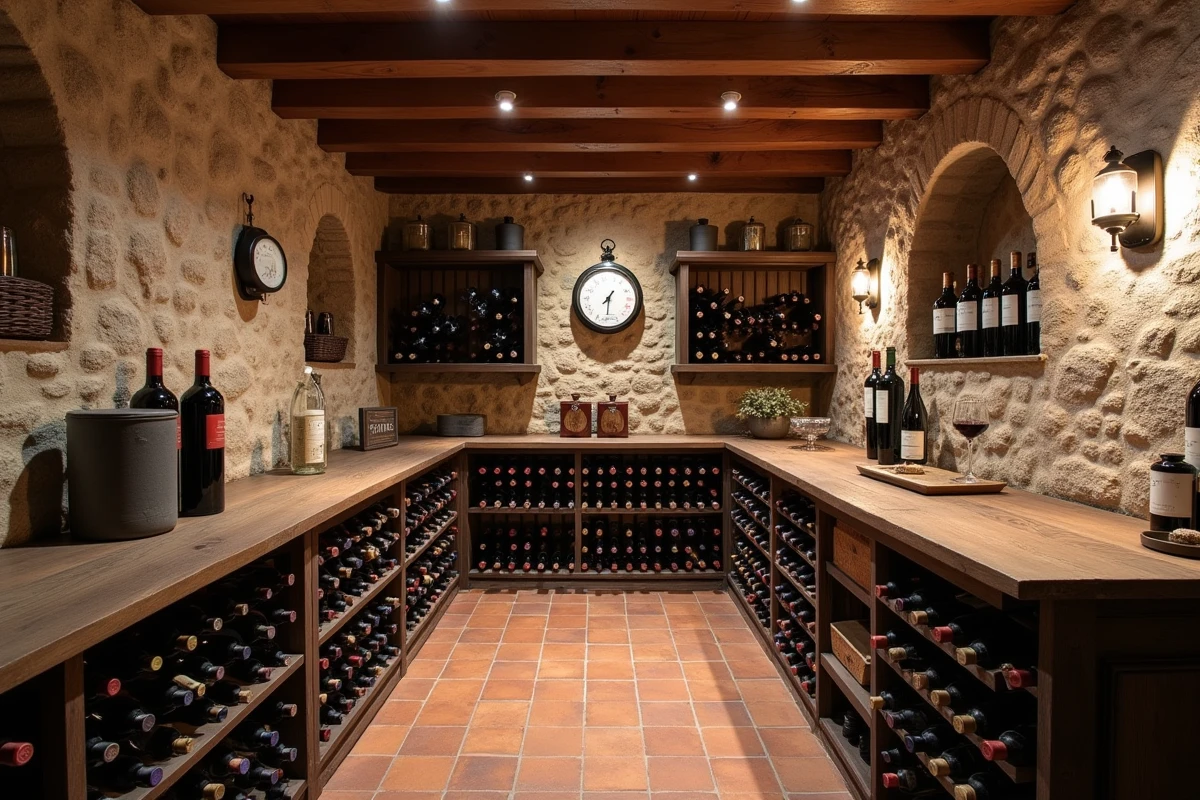
Cellars and basements refer to two distinct construction realities, even though everyday language often confuses them. A cellar is an underground volume, often unheated, originally designed for storage. The basement, on the other hand, can be semi-buried or fully buried, sometimes covering the entire footprint of the building. Choosing between these two spaces for development requires understanding their respective technical constraints before drawing any plans.
Ceiling Height and Ventilation: The Two Criteria That Settle the Debate
Before thinking about decor or furniture, two physical parameters determine what an underground space can become. The ceiling height conditions both the comfort of use and regulatory compliance. A recently constructed basement often offers sufficient height for standing movement, while an old cellar rarely exceeds a low ceiling, sometimes vaulted, which limits possibilities.
Ventilation is the second filter. A semi-buried basement sometimes has high windows or vents that allow for natural air renewal. A fully buried cellar lacks any openings to the outside, necessitating the installation of mechanical ventilation as soon as one considers spending more than a few minutes there.
Understanding the differences between cellar and basement for development allows for an accurate diagnosis before engaging in any work. A misjudgment regarding either of these two criteria can turn an appealing project into an expensive catch-up job.
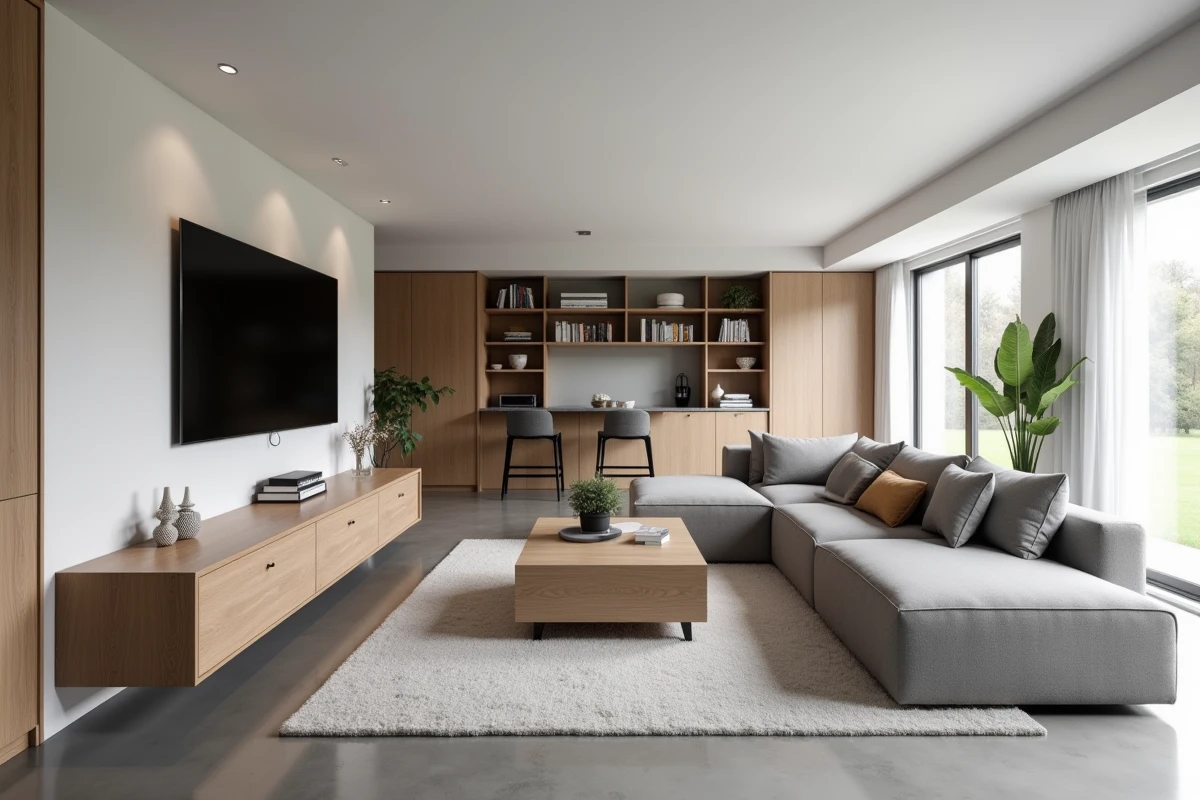
Converted Cellar: What Uses Remain Realistic Without Natural Light
The absence of natural light is not an aesthetic detail. It determines the regulatory usage category of the room. A cellar without openings to the outside cannot be classified as a habitable room in the legal sense, even after insulation and heating installation. Several prefectures remind that a minimum height of 2.20 m, access to natural light, and effective ventilation are necessary for an underground space to be rented or declared as living space.
This framework immediately rules out guest rooms or rental studios in most old cellars. The uses that work without forcing the constraints include:
- Wine cellar, pantry, or larder, where stable temperature and darkness are assets rather than drawbacks
- Organized storage space (laundry room, seasonal storage) with suitable artificial lighting and a dehumidifier
- Workshop or music studio, provided that mechanical air extraction is installed and wall humidity is managed
Each use imposes a different level of treatment, but none require creating openings in the structure, which reduces the budget and administrative procedures.
Semi-Buried Basement and Energy Performance: The Trap of the DPE
A semi-buried basement seems more promising for creating a real living space. The presence of high windows or vents provides a minimum of light and natural ventilation. The temptation to install a bedroom, office, or living room is strong.
The problem arises during the energy performance diagnosis. Semi-buried volumes concentrate difficult-to-treat thermal bridges: junction between the buried wall and the slab, capillary rise, thermal inertia of the ground. Achieving an acceptable energy class without heavy work (external peripheral insulation, double-flow ventilation, complete moisture treatment) is a technical challenge.
For several years, ANIL and Ademe have reported an increase in requests for advice on requalifying basements into leisure or storage spaces, which are not counted as living space. This trend reflects a pragmatic calculation: a basement not declared as habitable escapes the constraints of the DPE and the gradual prohibitions on renting energy-consuming housing.
Insulation from the Inside or Outside
Insulation from the inside (glued double lining or metal framework with mineral wool) remains the most common solution, but it eats into usable space and does not eliminate thermal bridges at the foundation level. External insulation, more effective thermally, requires peripheral excavation and drainage, which multiplies the cost and duration of the work.
The choice between these two approaches directly depends on the intended use. For a storage space or workshop, internal insulation is sufficient. For a declared living space, external insulation combined with moisture treatment becomes the only credible option.
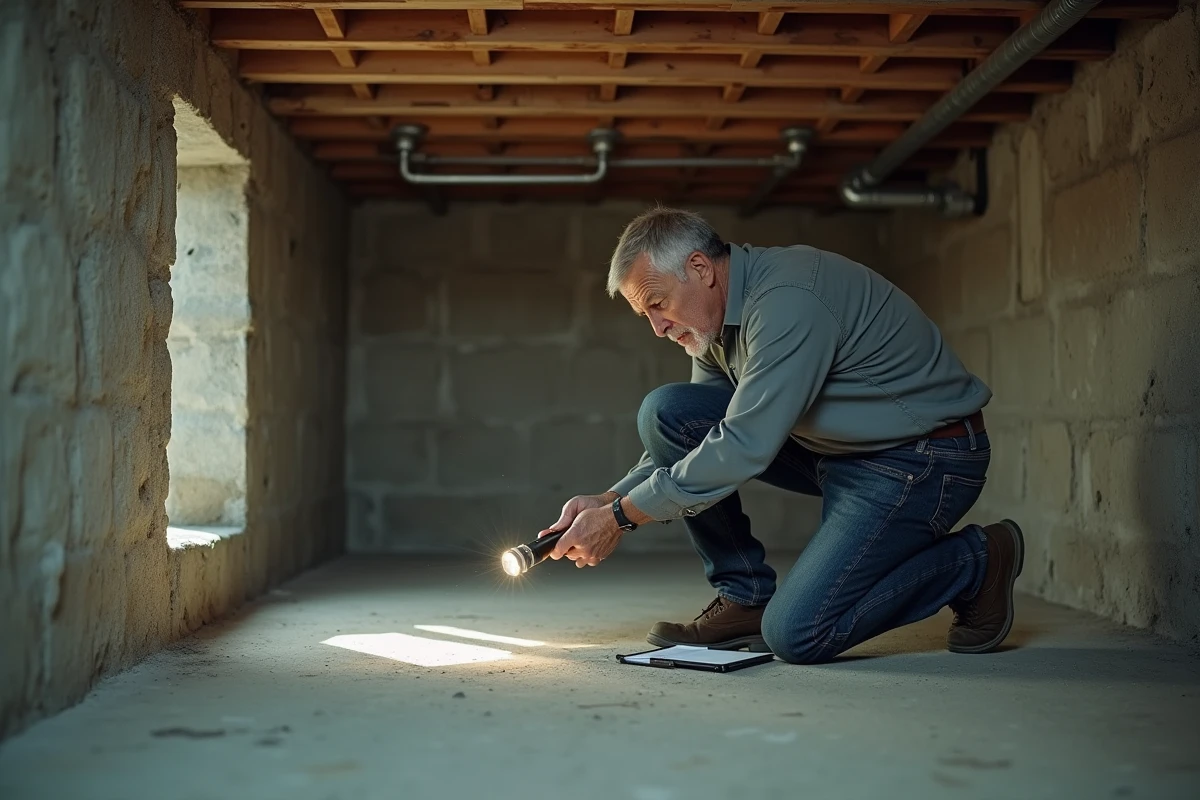
Moisture in Buried Walls: Diagnosis Before Renovation Work
Moisture is the common denominator of every cellar and basement. Two mechanisms often coexist: capillary rise from the ground and lateral infiltration through buried walls. A simple test with lime spray or a surface hygrometric measurement is not enough to distinguish one from the other.
A reliable diagnosis identifies the source before choosing the treatment. Applying a waterproof coating on a wall subject to capillary rise is like putting a bandage on a leak: the water finds another path and degrades the structure further along. The coating with hydraulic lime, often recommended for old walls, allows the masonry to breathe while regulating surface moisture.
For lateral infiltrations, the solution involves external drainage or, if not possible, internal lining. The lining creates a waterproof shell inside the volume, but it does not address the cause: water remains against the wall and can eventually weaken the foundations.
Living Space or Ancillary Space: What Declaration Changes
Declaring a converted basement as living space increases the property’s market value, but also the property tax and development tax if the work required a planning permit. Conversely, keeping the space as ancillary (pantry, laundry, storage) has no additional fiscal impact.
The choice between these two statuses guides the entire project:
- Living space: regulatory ceiling height, natural light, compliant ventilation, effective insulation, prior declaration or building permit depending on the created area
- Ancillary space: no constraints on natural light, sufficient mechanical ventilation, no change in the property’s taxation
- In co-ownership, transforming a cellar into a habitable room requires a vote in the general assembly, as it modifies the shares and common areas
The distinction between cellar and basement, and then between living space and ancillary space, conditions the budget, procedures, and final result. A well-qualified space from the outset avoids unpleasant surprises during resale or compliance checks.