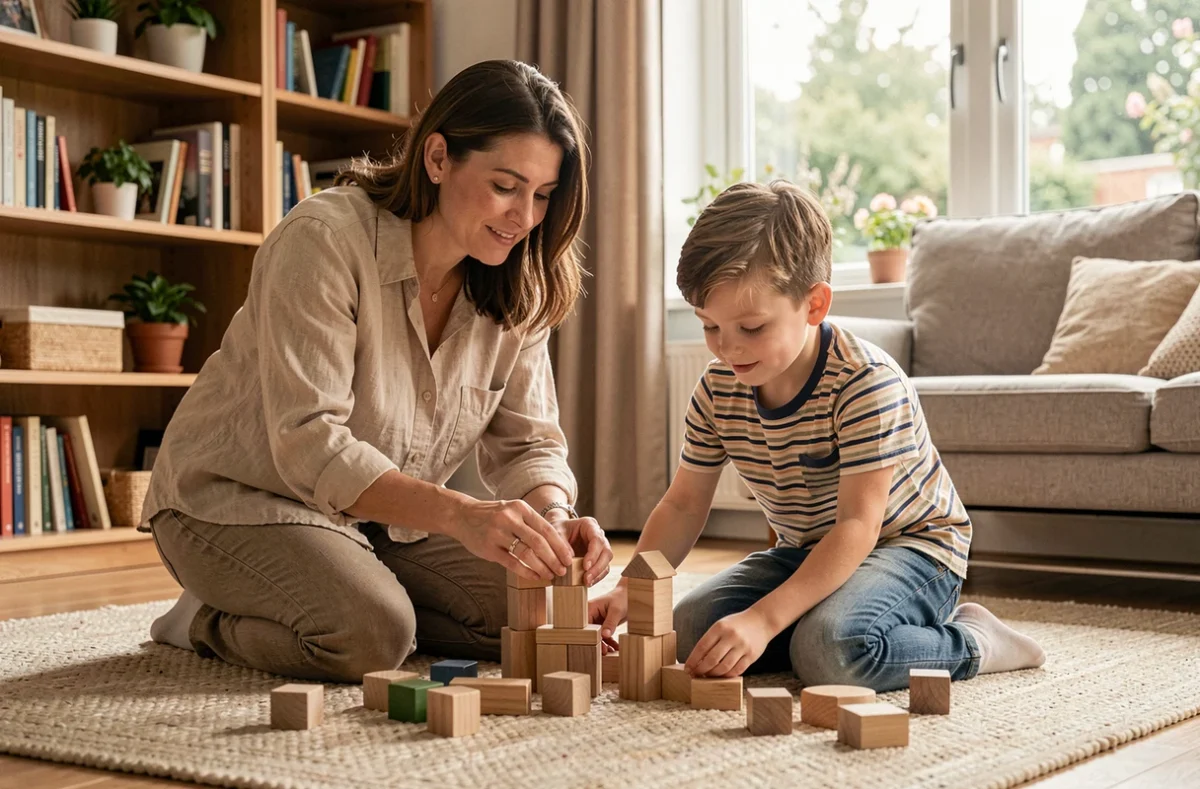
A child spills their drink at dinner, another refuses to get dressed in the morning, a third cries for no apparent reason after school. Supporting children day to day means navigating these small moments without losing sight of what matters: giving them a stable environment where they can grow up feeling secure.
Exhausted or isolated parent: supporting your child despite the fatigue
Have you noticed that parenting advice almost always assumes you’re available, well-rested and surrounded by support? The reality is often different. Chronic fatigue, no family support, irregular working hours: an exhausted parent can’t carry everything alone.
The most useful first step isn’t adding an educational activity to the schedule. It’s identifying the local resources that are already available. Municipal community centers regularly offer parent support groups, sometimes with on-site childcare. These spaces give parents a chance to talk about everyday challenges without being judged.
Some local authorities also provide free, open-play spaces. These serve two purposes: giving children opportunities to socialize and giving parents a supervised break.
For more support, Maman Louzou’s advice for children covers a range of family situations, with practical suggestions for every age group.
When you’re low on energy, it’s better to stick to one dependable routine (bedtime reading or a ten-minute walk) than to make a long list of resolutions. One consistent routine is better than ten activities that fall by the wayside.

Children’s emotions: recognizing the signs before they become overwhelming
A child who hits, shouts or withdraws isn’t “throwing a tantrum.” They’re expressing a need with the tools they have. A parent’s role is to understand the signal, not silence it.
Putting a name to what your child is feeling
Before children can manage an emotion, they need someone to name it for them. “You’re angry because your brother took your toy” is a simple sentence, but it does a lot of work. It validates the feeling and gives a name to a confusing sensation.
This approach works from as young as two or three. At that age, children have a limited emotional vocabulary. Naming the emotion helps keep it from overwhelming them. Over time, they start using these words themselves.
Distinguishing a normal phase from a warning sign
All children go through periods of anger, sadness or withdrawal. The challenge is knowing when these behaviors need particular attention.
Here are a few practical signs that can help distinguish a passing phase from ongoing distress:
- Gradual social withdrawal (the child no longer wants to see friends or avoids the playground) should be taken seriously
- Persistent sleep problems, especially when accompanied by daytime irritability, are a reliable indicator
Not dismissing these difficulties as mere “phases” is the first step toward taking action in time.
Screens and family life: looking beyond screen time
Most parenting guides set limits on screen time. That’s a starting point, but it isn’t enough. Research cited by the Fondation pour la Recherche Médicale highlights that how screens are used matters just as much as how long children are exposed to them.
Notifications, personalized recommendations and endless scrolling are designed to capture attention. A child watching a thirty-minute documentary has a different relationship with screens from one scrolling through short videos for the same amount of time.
What works in practice
Talking with your child about their screen use has been shown to have a protective effect. This doesn’t mean interrogating them (“What did you watch?”), but having an open conversation about what they saw, liked or found strange. Regular dialogue builds critical thinking skills that time limits alone can’t provide.
The other lever is the environment. Offering accessible alternatives (sports, outings, board games, time outdoors) naturally reduces the role screens play. Local authorities that invest in cultural and sports activities for families are helping address the issue. Prevention can’t rest solely on parents.

Children’s self-confidence: built through everyday actions
Confidence can’t be commanded. It develops through ordinary, repeated situations in which children discover their ability to take action.
Letting a four-year-old set the table, even if they put the forks on the wrong side, tells them without words: “I trust you to contribute.” Independence is built through small daily successes, not abstract words of encouragement.
Here are a few everyday situations that can build confidence:
- Give them a simple choice (which fruit to have for a snack, which book to read tonight) so they can practice making decisions
- Let them solve a small problem on their own before stepping in, even if it takes longer
- Recognize their effort rather than the outcome (“you tried several times, and that’s what matters”)
- Accept that they may do things differently from what you had planned, without correcting them every time
These actions may seem insignificant. Over time, they form the foundation children rely on to face more complex situations, at school and in their relationships with others.
Supporting a child day to day doesn’t require expertise or boundless energy. A routine you stick to, an emotion you name, a conversation about screen use, a choice you entrust to them: these are the repeated actions that help children grow up feeling secure.