
The citizen dynamics in Rennes rely on funding mechanisms, land availability, and associative structuring that go beyond simple project calls. Understanding these workings allows us to grasp why some initiatives endure over time while others fade after a few months.
Municipal land and availability: the underestimated lever of citizen projects in Rennes
Access to buildings conditions the viability of any solidarity initiative. In Rennes, the community has chosen to make municipal and metropolitan spaces available to associations and groups of residents, rather than limiting itself to operational grants.
The “Our Common Spaces” initiative, led by Rennes Métropole, illustrates this logic. Sixteen spaces spread across the territory (buildings, green spaces, natural areas) are offered to structures in the social and solidarity economy to deploy projects related to ecological transition. The selected themes cover biodiversity, water resources, sustainable food, renewable energies, and the circular economy.
The Atelier des Trois Maisons, opened in May 2026 in Cleunay in a municipal building of 230 m² financed to the tune of 1.1 million euros by the City, represents a concrete case. This place hosts artistic, manual, sports, and associative activities, with an openness to self-employed individuals.
This hybrid model, where public land serves as a foundation for mixed uses, diversifies the revenue sources of the place and reduces its dependence on grants.
The initiatives documented on rennes-en-commun-2020.fr extend this approach by articulating citizen participation and shared management of common spaces at the metropolitan level.
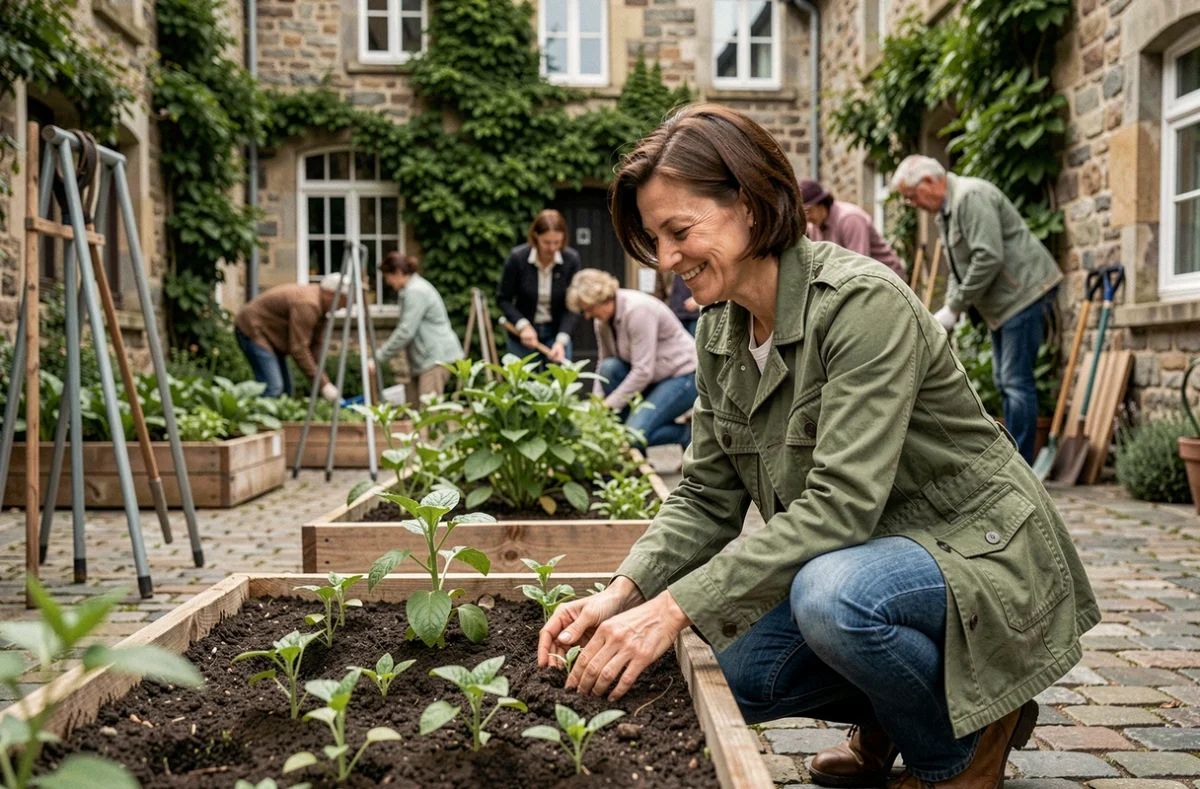
Associative volunteering in Rennes: a structural point of fragility
The associative fabric in Rennes is dense, but its volunteer base remains fragile. A survey conducted by the City of Rennes and the House of Associations, published in November 2025, highlighted this tension. At the Volunteer Forum on October 1, 2026, nearly 120 structures were present, indicating an abundant offer but also increased competition to capture citizen engagement.
This imbalance between associative offer and volunteer availability has direct consequences on local solidarity. Structures that rely solely on volunteering for their daily operations are the most exposed: solidarity grocery stores, self-repair workshops, ephemeral resource centers.
What distinguishes associations that retain their volunteers
We recommend looking at three criteria to assess the resilience of a citizen association:
- The presence of a permanent physical location, which creates a stronger anchor and routine of engagement than occasional events
- The articulation between volunteering and economic activity (paid workshops, solidarity sales), which allows for at least one coordination position to be salaried
- Involvement in a structured metropolitan network (Common Call, “Our Common Spaces”), which provides visibility and access to public funding
Associations that combine these three elements resist volunteer erosion better than those that rely solely on goodwill.
Climate mobilization and solidarity in Rennes: convergence or dispersion
The recent trend in Rennes is at the intersection of climate, peace, and social justice agendas. In September 2026, about forty residents, associations, unions, and parties organized a day of mobilization including a shared picnic, popular forum, and march. A new action was already announced for November, signaling a desire for structuring beyond the occasional event.
This convergence poses an operational problem. When a collective attempts to simultaneously address ecological transition, food solidarity, and international peace, the risk of message dilution is real. The most effective initiatives in the territory remain those that target a specific axis with measurable results.
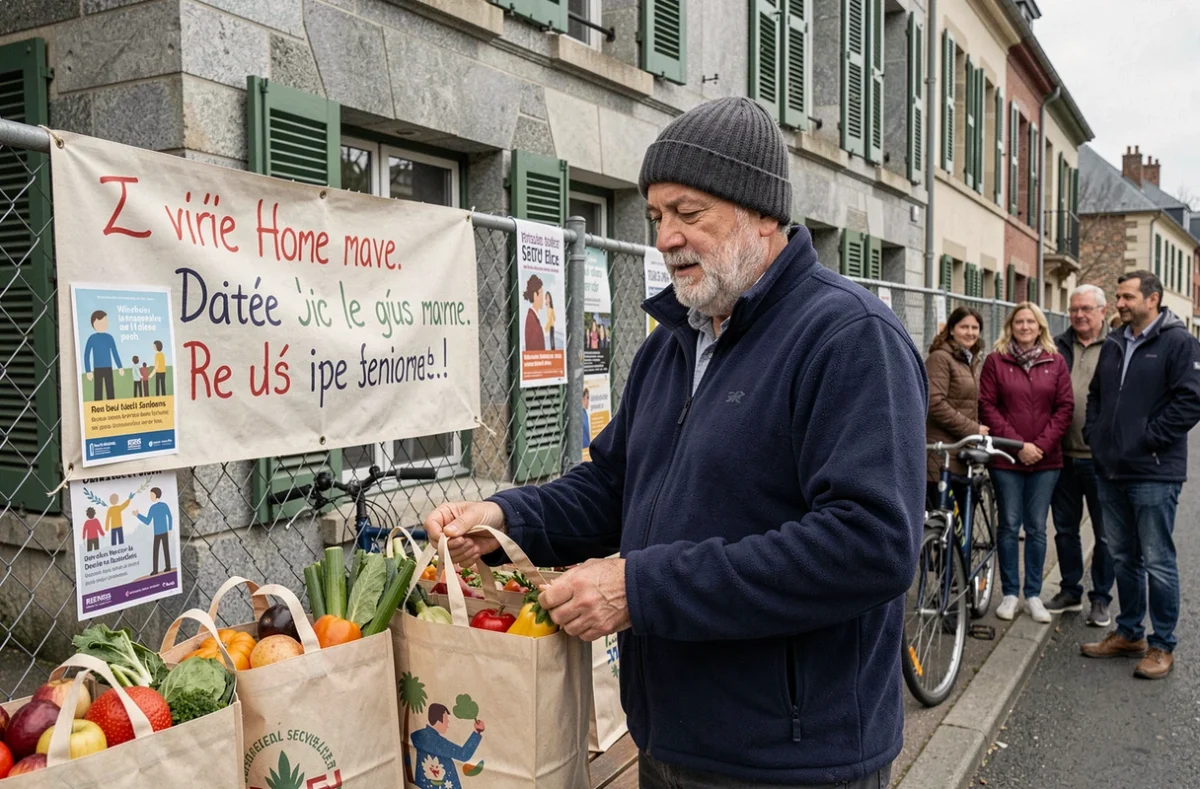
Food solidarity and priority neighborhoods
Food solidarity is increasingly intertwined with ecological transition in Rennes’ priority neighborhoods. Initiatives like La Contrib’, supported by cultural and associative actors, directly fund associations engaged in ecological and social transition. This type of local redistribution mechanism, where a cultural event channels part of its proceeds to solidarity structures, constitutes a reproducible model.
The challenge for local actors is to maintain this articulation without transforming every food project into an ecological showcase disconnected from the immediate needs of residents.
Metropolitan Common Call: operation and selection criteria
The Common Call (AAC), launched annually by Rennes Métropole as part of the metropolitan solidarity strategy adopted in September 2022, is the main tool for financial support for associative projects focused on solidarity and equality. The envelope is open to associations present in the 43 municipalities of the metropolitan area.
The covered areas relate to solidarity and equality in the broad sense. Funding aims at concrete actions, not structures: it is the project that is supported, not the ongoing operation of the association. This distinction explains why some well-established structures fail to secure funding if their application lacks operational precision.
- Eligibility limited to 1901 law associations based within the perimeter of the 43 metropolitan municipalities
- Annual selection based on application, with evaluation of territorial impact and coherence with the metropolitan solidarity strategy
- Possibility to combine the AAC with other mechanisms (availability of premises, support through the Citizen Factory)
For project leaders, the key remains documented local anchoring and the ability to demonstrate measurable impact on the targeted audiences. The strongest applications are those that precisely identify their intervention territory, target audience, and monitoring indicators.
The Rennes mechanism for supporting citizen initiatives thus relies on a triptych of public land, project-based funding, and associative structuring. It is the articulation of these three levers that produces sustainable results, not each of them taken in isolation. Project leaders who neglect one of these pillars expose themselves to short cycles of mobilization followed by rapid fatigue.