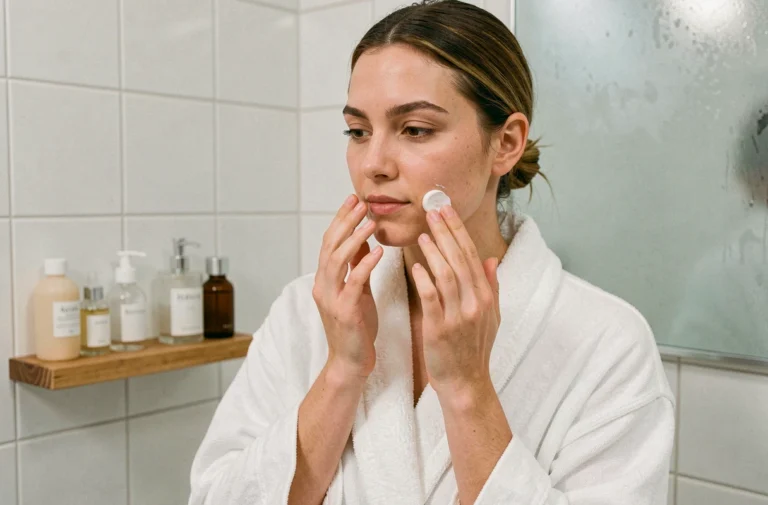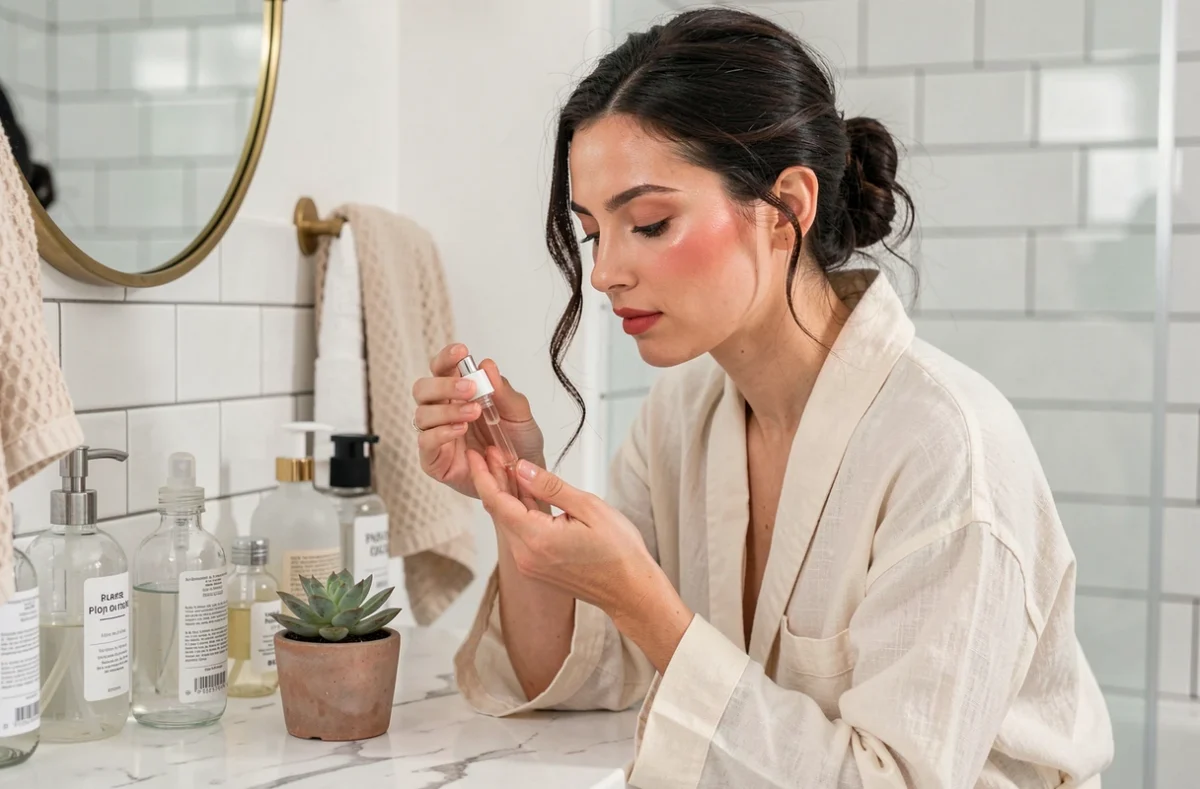
The beauty trends of 2024 mark a shift towards skin health rather than cosmetic correction. The sought-after natural glow no longer relies on the accumulation of illuminating products, but on strengthening the skin barrier, rigorous sun protection, and a more attentive reading of compositions. This shift changes how a beauty routine is constructed on a daily basis.
Skin Longevity: The Concept Replacing Anti-Aging in 2024
The vocabulary is evolving in the facial care industry. The notion of anti-aging gives way to skin longevity, a change that reflects a different approach to aging. While classic formulations aimed at the visible reduction of wrinkles, new directions focus on the biology of aging, the skin microbiome, and the skin’s barrier function.
In practice, this means that skincare no longer solely aims to smooth the surface. The goal is to keep the skin healthy in the long term by supporting its natural defense and regeneration mechanisms.
This evolution is reflected in the active ingredients highlighted by laboratories, which prioritize ingredients capable of supporting the skin barrier and microbiome. To delve deeper into these topics, the Olivia Style beauty site details several of these actives in dedicated skincare routine guides.

Sun Protection and SPF Makeup: A Confusion to Clear Up
Makeup containing an SPF has become widespread. Foundations, BB creams, and powders claim integrated sun protection. This promise deserves to be nuanced.
Dermatological recommendations are clear: a broad-spectrum sunscreen of at least SPF 30 remains the foundation, applied before exposure and then reapplied regularly. A foundation with SPF does not fulfill this function for a simple reason: the amount applied to the face is well below what is necessary to achieve the claimed protection.
Relying on a hybrid makeup-sunscreen product as the sole shield amounts to exposing oneself without sufficient protection. The most reliable routine separates the two steps: a water-resistant sunscreen as the first layer, then makeup on top. This point remains one of the blind spots in so-called simplified beauty routines.
European Regulation on Allergens: What Changes for Natural Care
Products labeled “natural” or “organic” are not exempt from regulatory constraints. The regulation (EU) 2023/1545 has expanded the mandatory labeling of allergenic fragrance substances from 26 to 82 molecules. New products launched on the market must comply with these requirements starting July 2026.
This extension has a direct impact on cosmetics formulated with significant oils or botanical extracts. These ingredients often contain naturally occurring allergenic fragrances, which must now be listed individually on the label.
For consumers, this translates into longer INCI lists on packaging. A product suddenly displaying more ingredients has not become less safe: it is simply more transparent. Knowing how to read the INCI list allows one to distinguish an added allergen from a component naturally present in a plant extract.
- Check for individually named allergenic fragrances (linalool, limonene, citronellol, among others) on the label, even on an organic product
- Compare formulations before and after compliance: a longer list does not mean a more chemically loaded product
- Prefer brands that detail the origin of each component (natural extract or synthetic molecule)
Minimalist Beauty Routine: The Limits of Multifunction Products
The trend towards minimalism pushes towards products that combine multiple functions: a stick for lips and cheeks, a tinted moisturizing cream with SPF, a serum combining several actives. The idea is appealing for its practicality.
The limit appears when examining the actual effectiveness of each function. A product that promises everything cannot deliver everything at an active dose sufficient enough. A serum combining retinol, vitamin C, and niacinamide in one bottle raises questions about stability and the appropriate pH for each active.
Multi-use creamy textures work well for everyday makeup. They provide a natural, quick finish suitable for on-the-go use. However, for active treatments (exfoliation, targeted treatment, sun protection), product specialization remains a guarantee of superior effectiveness.
- Multifunction products are suitable for light makeup and quick touch-ups
- Active treatments (exfoliating acids, retinol, sunscreen) benefit from remaining separate steps in the routine
- Simplifying the routine does not mean reducing the number of products, but choosing products where each function is genuinely dosed
Natural Facial Glow: What the Skin Really Needs
The sought-after glow is not a cosmetic effect. It is a marker of skin health. Properly hydrated skin, protected from the sun, and with a well-functioning lipid barrier reflects light evenly.
Highlighters and illuminators reproduce this surface effect without addressing the cause. They have their place in occasional makeup, but deep hydration and daily protection produce a more lasting glow than any pearlescent pigment.
Regular exfoliation, tailored to skin type, promotes cell renewal without aggression. These actions work deeply, where makeup merely decorates the surface.
Beauty in 2024 boils down to a technical arbitration: choosing treatments that strengthen the skin rather than products that mask its weaknesses. The European regulation on allergens makes this reading more accessible, and research on skin longevity provides a scientific framework for what common sense has already suggested.