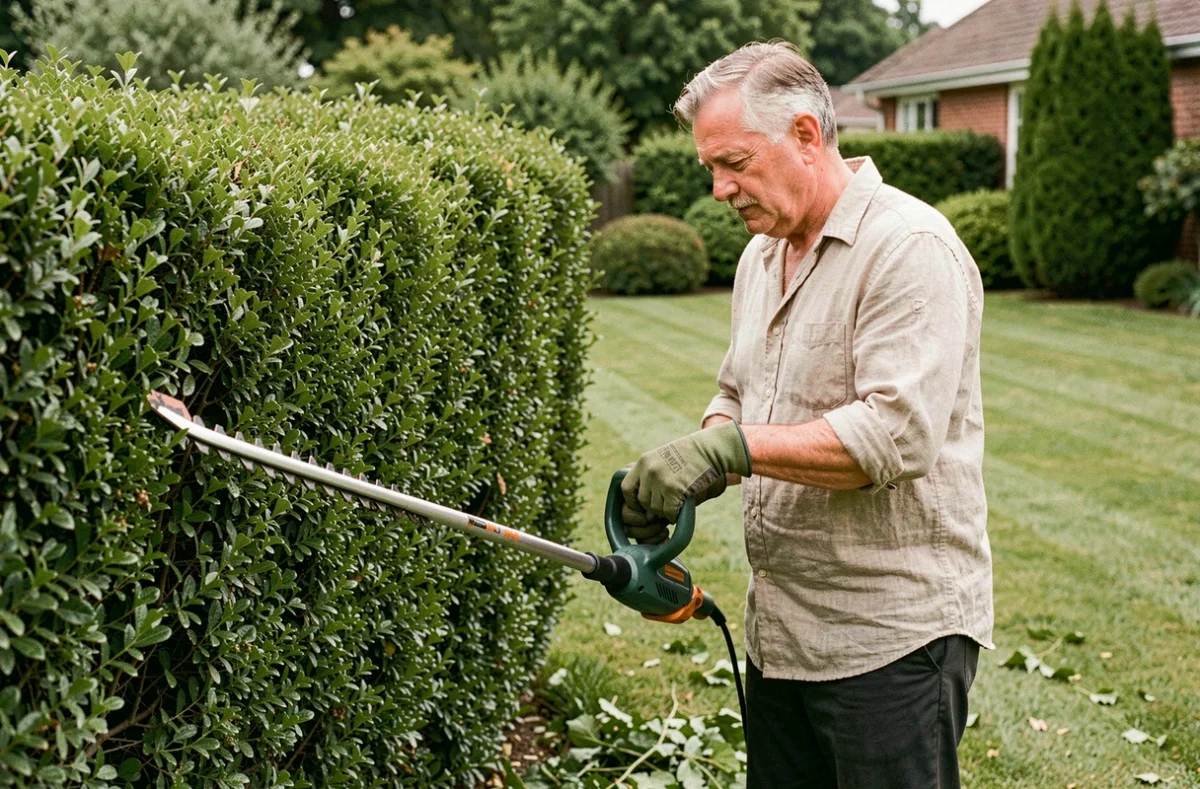
The blade length of a hedge trimmer is measured in centimetres, but it does not tell you how far you can actually reach from your working position. The figure given by the manufacturer may refer either to the blade’s total length or to its effective cutting length—that is, the section actually fitted with teeth. This distinction alone can change how you interpret the specifications when comparing models.
Weight, balance and fatigue: what blade length alone doesn’t tell you
A longer blade reduces the number of passes along the hedge. In theory, this means faster work. In practice, every extra centimetre increases leverage when you hold the tool away from your body, especially when cutting above shoulder height.
The effect is felt less in minutes than in accumulated fatigue. The tool’s weight and balance determine how long you can actually work far more than the stated blade length. A hedge trimmer with a long blade but poor balance forces you to put it down every few minutes, cancelling out any theoretical time savings.
When choosing the blade length for a hedge trimmer, consider the cutting height you work at most often in your garden. Trimming a low hedge at hip height puts little strain on your shoulders. Trimming the top of a two-metre hedge with your arms outstretched turns every gram into a muscular strain.
Ryobi’s ergonomic advice emphasises this point: the user’s posture and grip matter just as much as the blade’s specifications. A short blade used properly at the right height produces a cleaner cut than a long blade handled with tired arms.
Tooth spacing and cutting capacity: what blade length doesn’t guarantee
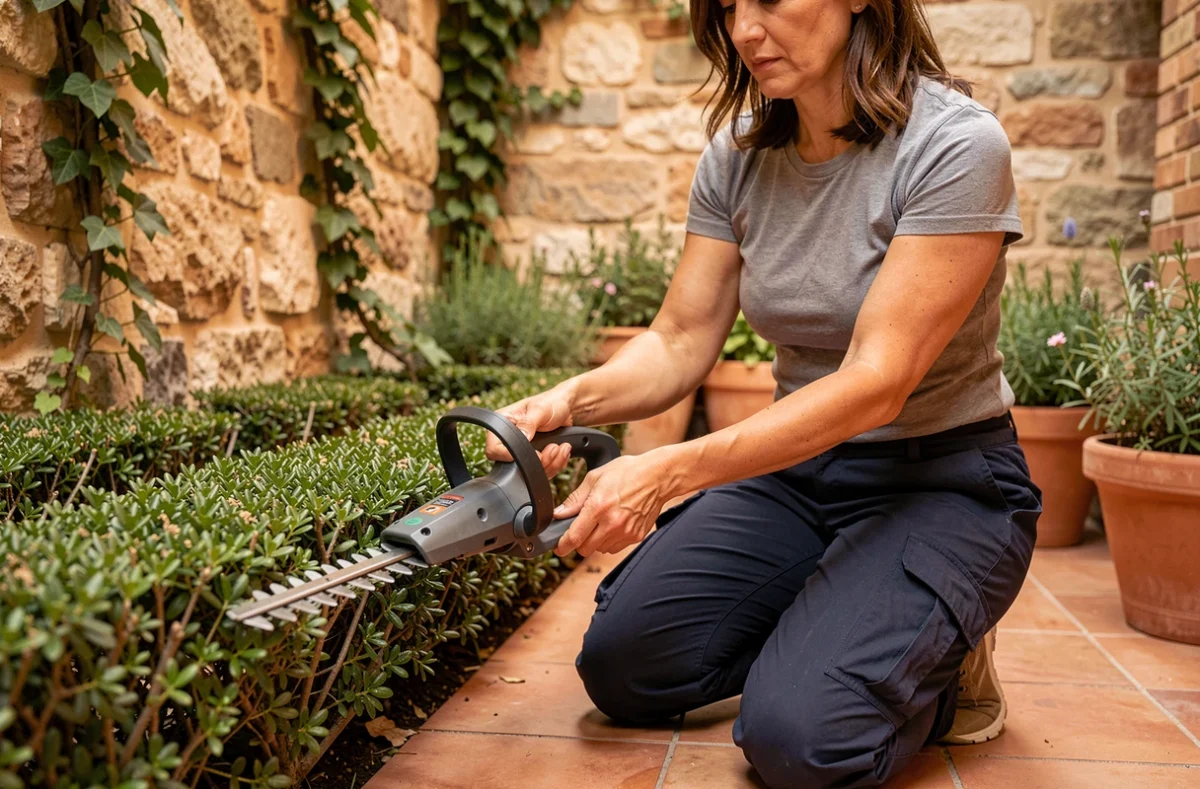
A common misconception is that a long blade can cut thicker branches. Cutting capacity depends on tooth spacing (also called the cutting gap) and motor power, not the length of the blade bar.
Ryobi distinguishes tooth spacing according to the type of vegetation and recommends checking this specification on the product page before buying. In short:
- Narrow spacing is suitable for fine-leaved hedges (privet, boxwood, hornbeam). It gives a precise cut and prevents small leaves from getting caught between the teeth.
- Medium spacing handles typical garden hedges (thuja, laurel) with flexible branches. It is the most common compromise on consumer models.
- Wide spacing, combined with a powerful motor (petrol or high-end battery-powered), can cut through thicker woody branches. However, the tool is also heavier and noisier.
Checking tooth spacing before blade length helps you avoid buying a tool that cannot cut the branches actually growing in your hedge.
Blade length by hedge type: practical guidelines
Competitors often provide exhaustive tables. Three scenarios cover most home gardens.
Low hedge or ornamental shrub
A 40 to 50 cm blade offers the best manoeuvrability for shaping or maintaining borders. The tool stays light and can be operated with one hand for finishing touches. A short blade also makes it easier to work in tight spaces, such as between a wall and the hedge, without hitting obstacles.
Standard garden hedge up to two metres
A 55 to 60 cm blade offers the best balance between reach and weight for thuja, laurel or hornbeam hedges. Each pass covers enough area to reduce the number of trips back and forth along the hedge.
Long, dense or tall hedge
A 60 to 70 cm blade speeds up work on long stretches of hedge. The weight increases noticeably and manoeuvrability decreases. For tall hedges, a telescopic pole may make a bigger difference than a few extra centimetres of blade: it lets you reach the top from the ground, but adds weight and fatigue during use.
Trimming season and regulations: a factor to consider before choosing a tool
Before sizing your tool for a major trimming session, check whether trimming is permitted at that time of year. The LPO recommends not trimming hedges from 16 March to 31 August to protect nesting birds. The nests of protected species are legally protected, and local restrictions may also apply.
This calendar changes how you should choose your tool. If most trimming takes place over just a few weeks in autumn or late winter, the tool needs to be suited to intensive sessions, not use spread throughout the year. Fatigue resistance, battery capacity or the fuel tank size of a petrol model then become more decisive factors than blade length alone.
Motor type and blade length: finding the right match
Blade length only makes sense in combination with the motor that drives it. An underpowered motor paired with a long blade slows the cutting rate and strains against branches instead of cutting through them.
- A corded electric hedge trimmer is suitable for smaller gardens. The cable limits your range, but the tool remains lightweight. Blades of 50 to 60 cm work well with this type of trimmer.
- A lithium-ion battery-powered model offers freedom of movement. Runtime depends on battery capacity and the thickness of the branches being cut. With a long blade, the battery runs down faster.
- A petrol hedge trimmer delivers the most power and can handle long blades over large areas. The trade-offs are greater weight, noise and mechanical maintenance.
A well-matched tool has a blade suited to the hedge, a motor powerful enough to drive it without straining, and a weight you can manage for the entire session.
Choosing a hedge trimmer rarely comes down to a single number. Blade length determines the reach of each pass, but tooth spacing determines what the tool can actually cut, while the balance between weight and handling determines how long you can keep working before putting it down.